Diesel gets the headlines. The urea supply chain behind every truck's exhaust system is under the same pressure — and the cost exposure is harder to see.
Open for the fast read before you dive into the full article.
DEF prices have increased from $2.80 to $3.80 since January, reflecting a significant cost pressure on trucking operations.
The supply chain for urea, essential for DEF production, is under strain due to geopolitical disruptions and domestic production limitations.
Upcoming EPA regulations will likely double DEF consumption per mile for new trucks, exacerbating cost pressures for fleets.
The lack of a strategic reserve for urea means that supply disruptions could have immediate and severe impacts on both trucking and agriculture.
As DEF costs rise, fleets are already feeling the financial strain, with potential monthly DEF bills increasing significantly by 2027.
The blue-capped nozzle at a Pilot fuel island doesn't get much thought. A driver tops off the DEF tank the same way every time — three gallons, maybe four, somewhere between the diesel fill and the receipt. The pump price has crept up a dollar since January, from $2.80 to $3.80 in most of the country. Diesel at $5.40 a gallon is the number on the news. DEF at $3.80 doesn't make the chyron.
It probably should.
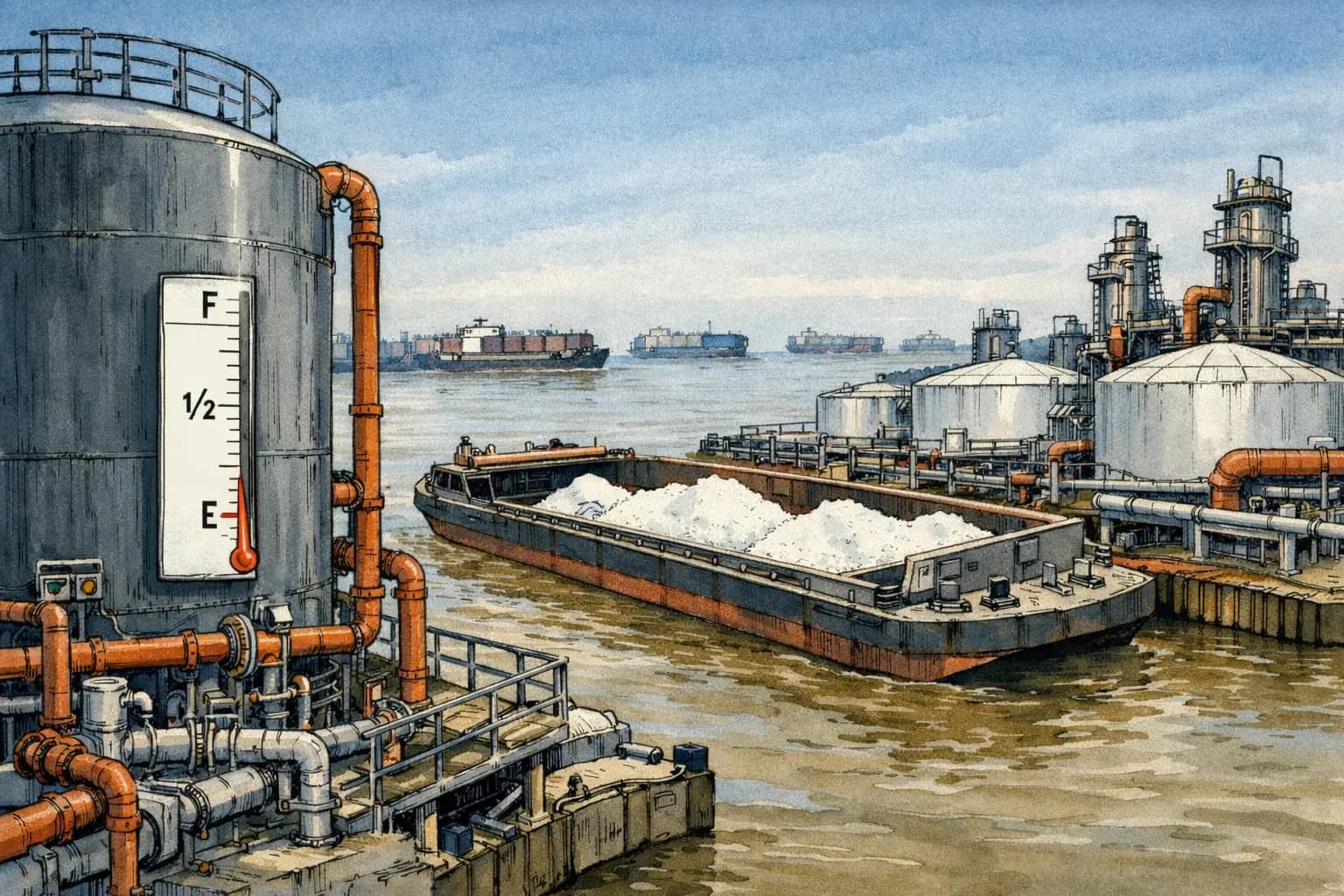
Diesel exhaust fluid is 32.5% automotive-grade urea and 67.5% deionized water. The urea is synthesized from ammonia and CO2 at natural gas-fed plants, and the United States imports roughly a third of its nitrogen supply. Domestic ammonia plants run at about 90% of rated capacity industry-wide, and CF Industries, the country's largest producer, has averaged 96-97% over the past five years. There is not much room to ramp up. There is also no strategic urea reserve — not in the U.S., not anywhere. Crude oil has the Strategic Petroleum Reserve. Urea has whatever is sitting in a tank at a blending facility in Louisiana.
Stay close to the market
Get Rig Load Report in your inbox
Weekly freight market analysis, new markets and fresh commentary when it matters.
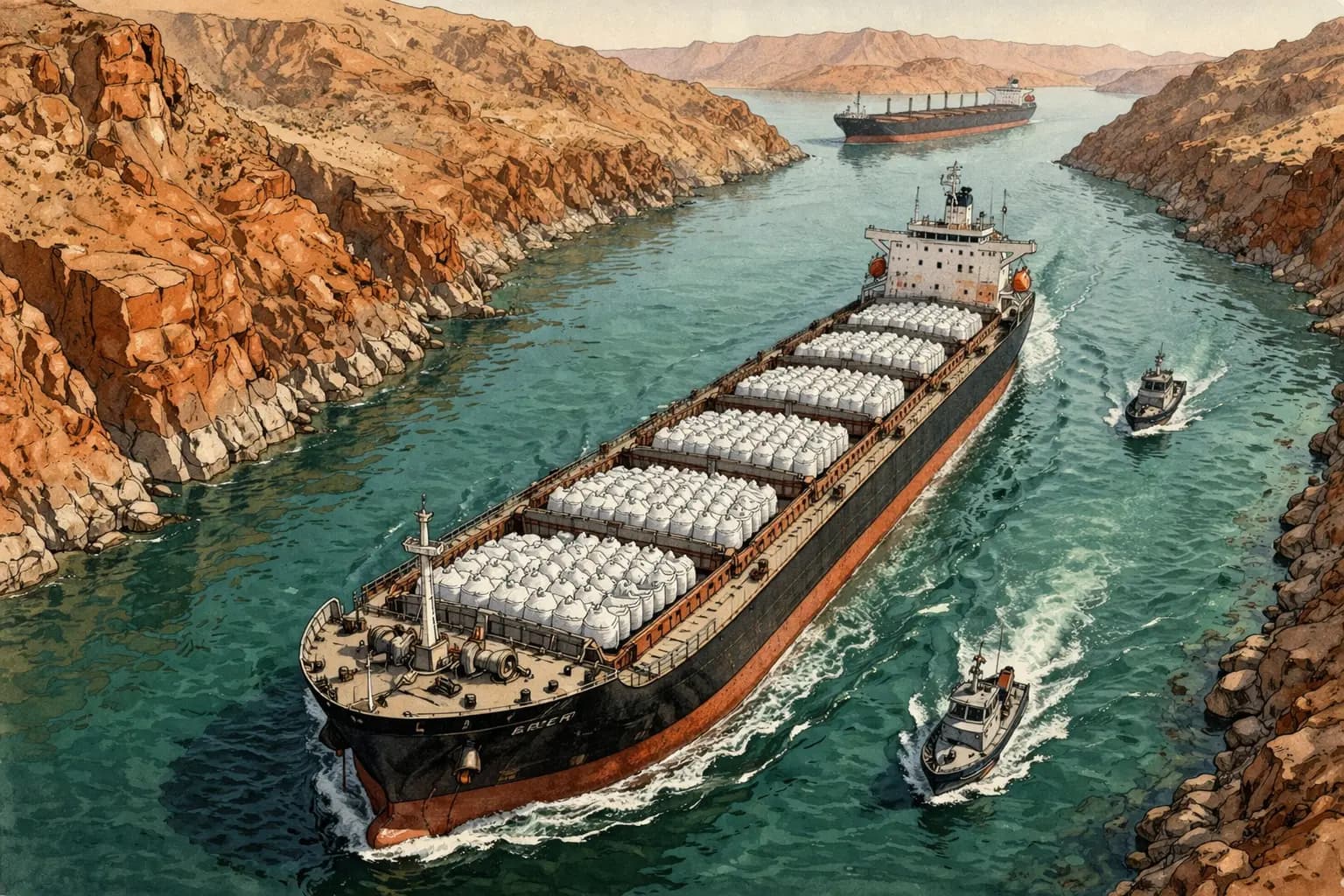
That supply chain runs through the same water that's choking diesel. The Middle East accounts for 25% of global urea exports, with the UAE, Qatar and Saudi Arabia shipping through the Strait of Hormuz. Iran's toll system has cut daily transits from 138 to roughly 12, with 40 nations now discussing joint action to reopen the strait. Chinese urea has effectively disappeared from the global market under export restrictions. Iran itself is down to one operating plant. At the NOLA trading hub, urea jumped $70 per short ton in a single week in early March, landing between $468 and $620 a ton. By mid-March, NOLA barge prices had climbed into the $690s per ton. Every $100 per ton of urea movement translates to about 15 cents a gallon at the DEF pump.
Where the squeeze compounds
The import disruption would be enough on its own. But it's arriving into a domestic market that was already tightening before Hormuz.
Mansfield Energy flagged in mid-2025 that several major domestic DEF production sites were entering scheduled maintenance, with some turnarounds lasting up to eight months. Dyno Nobel's nitrogen plant in St. Helens, Oregon, one of the Pacific Northwest's primary urea sources, changed hands last fall under uncertain conditions. The U.S. can't produce its way out of a supply disruption when its ammonia plants are already running near capacity.
And the competition for urea isn't just coming from trucks. Spring planting season has started, and farmers need the same nitrogen that goes into DEF. The American Farm Bureau warned that the Hormuz disruption is raising fertilizer costs heading into the growing season. SIAM, India's auto manufacturers association, told the government it has no visibility on urea supply past early April — India imports 50-60% of its technical-grade urea from Dubai and Egypt, both routed through the strait. Trucking and agriculture are drawing from the same shrinking pool. Neither has a backup source.
The 2027 math
On March 27, the EPA eliminated the requirement for DEF quality sensors on trucks and diesel equipment. The sensors, which monitor whether the fluid in the tank is the right concentration, had become one of the industry's most persistent maintenance headaches — triggering engine derates and roadside shutdowns when they malfunctioned. The fix lets manufacturers use NOx sensors to measure actual tailpipe emissions instead. ATA called it pragmatic. It is. But it also tells you something about where DEF sits in the regulatory conversation: the agency just spent political capital fixing the sensor problem. The demand-side DEF problem is larger, and it's on a different timeline.
The EPA confirmed in late 2025 that its model year 2027 NOx standards will take effect on schedule. The new limit is 0.035 grams per horsepower-hour, down from 0.20 — an 82% reduction. To meet it, engine manufacturers are moving to dual SCR systems with twin urea dosing, and both Tank Transport and FleetOwner have reported this will roughly double DEF consumption per mile.
A current Class 8 truck uses DEF at about 2.5% of its diesel consumption. At 7 miles per gallon over 10,000 miles a month, that's roughly 36 gallons of DEF. At today's $3.80, the monthly DEF bill is about $137 per truck. Not a number that keeps anyone up at night.
Pay the toll?
Now run the 2027 scenario. Dual SCR pushes DEF consumption to 5% of diesel — about 72 gallons a month. If urea prices keep climbing and pump DEF hits $5 a gallon, which is where bulk urea was trending in late 2021 before the last supply scare eased, that's $360 a month per truck. For a five-truck fleet, the DEF line goes from $685 a month to $1,800. It's not the number that breaks a carrier by itself. It's one more weight on a cost structure that's already bending, arriving at the same time as $5.40 diesel and linehaul rates that are rising but still not keeping pace with fuel costs.
The pre-buy is already visible in Class 8 order data. Some of that is fleets trying to lock in trucks before the 2027 standard adds $4,800 or more per unit in compliance costs. But every truck built after that line consumes more DEF, permanently. The fleet's structural demand for urea is about to increase, and the supply picture isn't moving with it.
What it costs today — and what to do about it
The DEF bill doesn't show up on a rate confirmation. It doesn't have a futures market or an EIA weekly report. Diesel has Brent crude, ULSD contracts and a dozen analyst dashboards tracking it in real time. DEF has Mansfield Energy publishing periodic spot checks and truck stop operators adjusting the pump price when their distributor raises the invoice. The price signals are lagged, the supply chain is opaque and most fleet accounting systems don't break DEF out as a separate line item from fuel.
That last part is worth fixing now. At $2.80 a gallon, burying DEF in the fuel budget made sense — $100 a month per truck, easy to overlook. At $3.80 and climbing, with NOLA urea in the $690s, it's no longer a number you can afford to ignore. If you're running a five-truck fleet and DEF hits $5 with 2027 consumption rates, the monthly DEF line goes from $685 to $1,800. That's a $13,000 annualized swing that doesn't show up in any surcharge table.
The practical problem is that diesel surcharges, which carriers and shippers have spent decades calibrating, don't account for DEF at all. If you're negotiating contract rates this quarter, the DEF trajectory should be part of that conversation — not as a separate surcharge line (the market isn't ready for that), but as context for where your all-in cost per mile is heading. Anyone signing a 12-month contract right now is locking in rates against a cost structure that could look materially different by Q4 if urea stays elevated and 2027 trucks start rolling off the line.
For owner-operators and small fleets, there's a simpler move: buy bulk. The spread between pump DEF at a truck stop and a 275-gallon tote from a distributor can run 30-40% in a tight market. If you have the space for a tote and the cash flow to buy ahead, the math works. At $3.80 pump versus $2.50-2.70 bulk, a truck burning 36 gallons a month saves $40-50 per truck per month. At 72 gallons post-2027, the savings double.
Where DEF goes from here depends on urea, and urea depends on Hormuz, Chinese export policy and domestic production capacity all at once. We built a DEF price market to start tracking it — the spread between $2.80 and $6.00 is the spread between an afterthought and a line item that changes fleet math. If you're also watching how long diesel stays elevated, our diesel duration market is counting the weeks above $4.50 in Q2. Two fluids, two cost pressures, same underlying supply disruption.
Why DEF doesn't come back down with diesel
Diesel will come down eventually. It came down after 2022, and it will come down again once Hormuz clears or demand destruction catches up. The DEF trajectory is different because the demand side is moving structurally. The 2027 engines will burn more of it for the life of the truck. The domestic production base isn't expanding. The global supply is concentrated in regions that have been unreliable for two years running.
It's possible that urea normalizes quickly. Chinese export restrictions could ease, or Hormuz could reopen and Gulf urea starts flowing again within weeks. The DEF price at the pump could drift back toward $2.50 by fall.
It's also possible that the convergence of tighter supply and higher structural demand creates a pricing environment for DEF that doesn't look like anything the industry has dealt with before. The last time urea spiked, in 2021, the Argus bulk DEF assessment at Dallas went from 60 cents a gallon to $1.59 — nearly tripling in 12 months — and that was without a 2027 consumption increase or a closed strait. This time, both of those are in play.
The honest read is that nobody knows. The data to resolve it doesn't exist yet in any clean, public form. Which is exactly the kind of question a prediction market is built to surface.